
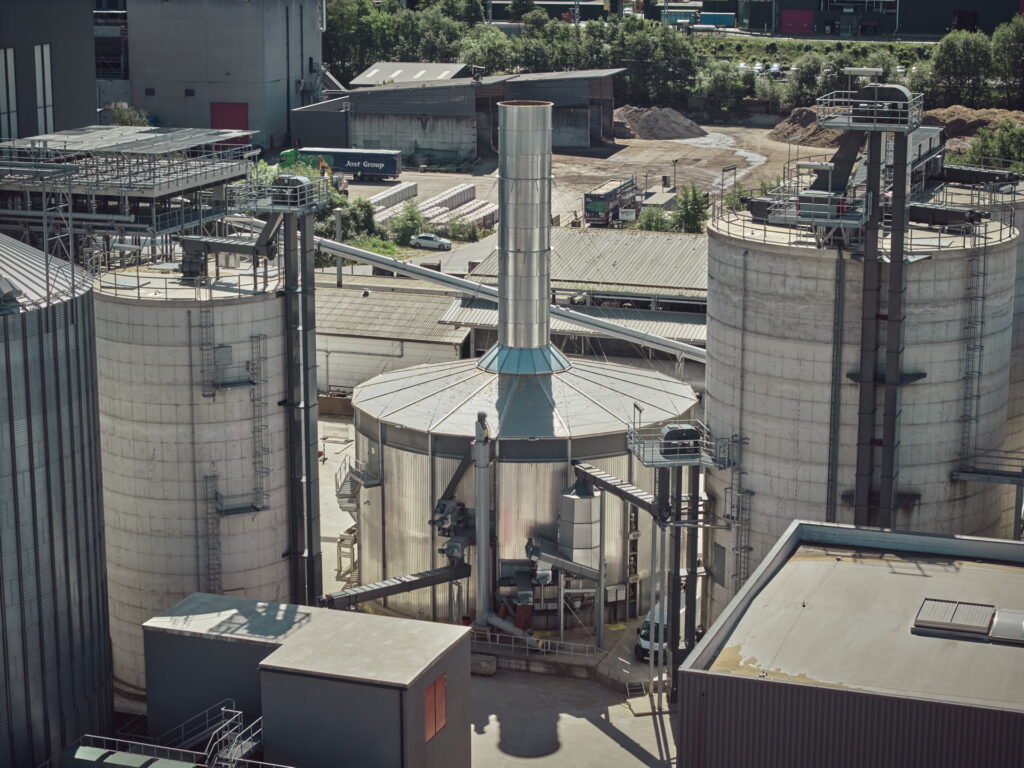
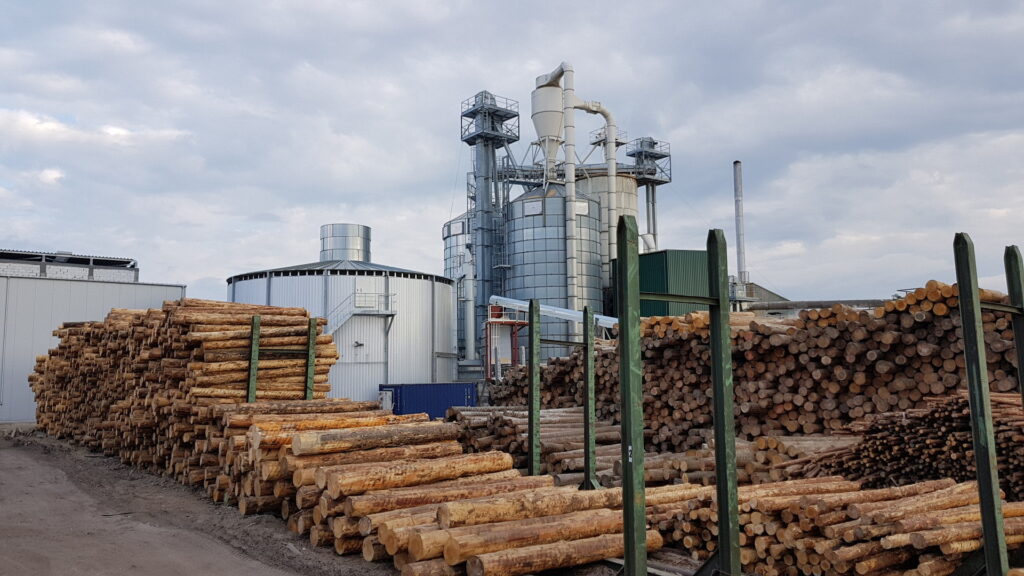
This accumulated expertise enables us to anticipate the specific constraints of each industry and offer proven solutions, while precisely adapting them to the particular requirements of your site and production.
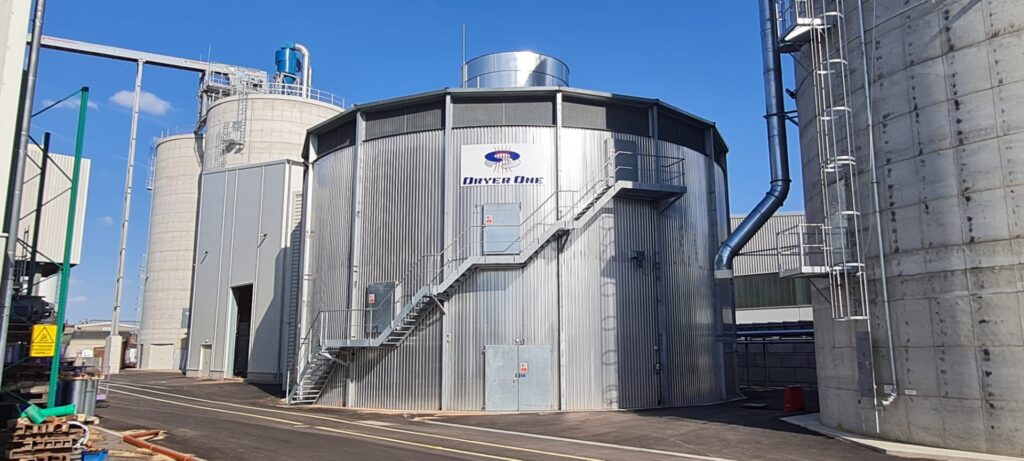
Double-disc dryer
The Dryer One “Double Disc” dryer combines optimized thermal energy use with high-capacity production.
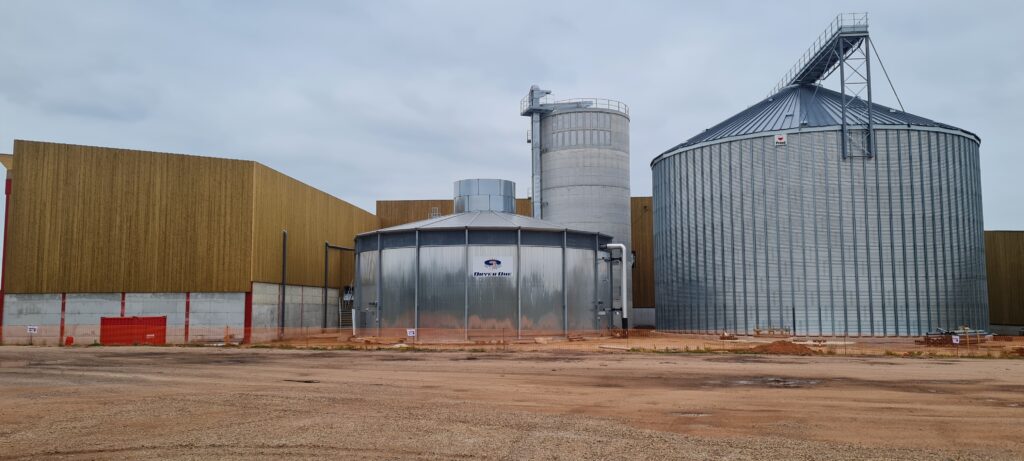
Single-disc dryer
The Dryer One “Single Disc” dryer is an ideal solution for lower production rates.
Double-disc dryer
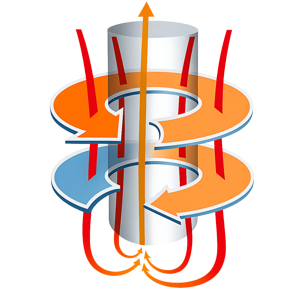
The Dryer One “Double Disc” dryer combines optimized thermal energy use with high-capacity production. The material to be dried is first spread over a lower rotating disc. After a complete rotation, it is transferred to a second upper rotating disc, where it rotates in the opposite direction, completing the drying process.
Hot air (65 to 100 °C), supplied by an external low-temperature energy source (such as a CHP unit or boiler), passes successively through both discs from top to bottom. This process ensures even heat distribution and delivers exceptional energy efficiency. After passing through both beds, the moisture-saturated exhaust air, cooled to a temperature of 25 to 30 °C, is efficiently discharged through the central stack.
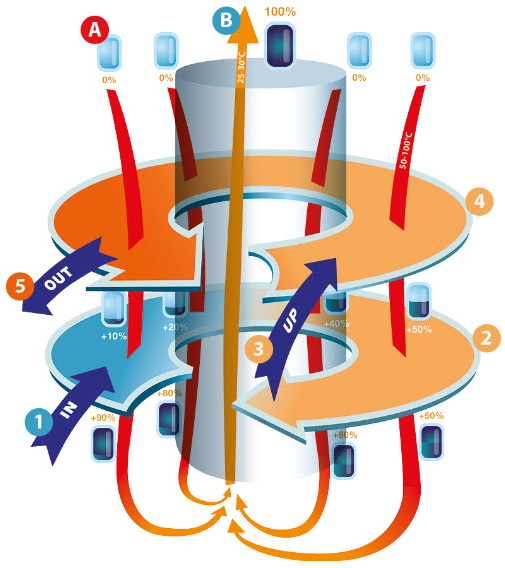

The material to be dried is fed onto the lower rotating disc.

The material to be dried completes a 360° rotation.

The material to be dried is transferred to the upper rotating disc by a bucket elevator or screw conveyor.

The material to be dried completes a 360° rotation on the upper rotating disc, in the opposite direction to the lower disc. This exclusive technology improves heat distribution and drying efficiency.

The dried material is discharged to the packaging or storage area.

Hot air is drawn from top to bottom in a counter-current flow. It passes successively through the upper and lower discs.

The moisture-saturated air is blown upward for discharge. Any dust present can be filtered.
Discover our range of Dryer One™ dryers
Range
Double Disc
DO 200
- Diameter
- 15 m
- Capacity*
- Up to 9 t/h
DO 300
- Diameter
- 18 m
- Capacity*
- Up to 14 t/h
DO 400
- Diameter
- 20 m
- Capacity*
- Up to 18 t/h
DO 500
- Diameter
- 23 m
- Capacity*
- Up to 23 t/h
DO 700
- Diameter
- 28 m
- Capacity*
- Up to 32 t/h
Range
Single Disc
DO 050L
- Diameter
- 8 m
- Capacity*
- Up to 3 t/h
DO 100L
- Diameter
- 15 m
- Capacity*
- Up to 6 t/h
DO 150L
- Diameter
- 18 m
- Capacity*
- Up to 9 t/h
DO 200L
- Diameter
- 20 m
- Capacity*
- Up to 12 t/h
DO 250L
- Diameter
- 23 m
- Capacity*
- Up to 15 t/h
DO 350L
- Diameter
- 28 m
- Capacity*
- Up to 21 t/h
*Example of drying wood sawdust to a moisture content of 10%. These values are provided for guidance only and may vary depending on the nature of the product and the drying conditions.
Single-disc dryer
The Dryer One “Single Disc” dryer is an ideal solution for lower production capacities (compared with the “Double Disc” model), for drying with lower-temperature air and when the volume of water to be evaporated is smaller. It is particularly recommended for incoming products with a lower moisture content and for applications requiring lower drying temperatures.
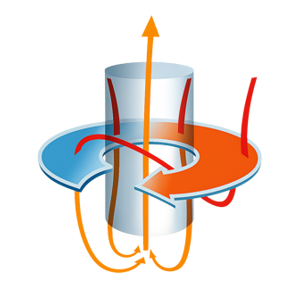
The material to be dried is distributed over a rotating disc through which a flow of hot air (50 to 100 °C) passes, supplied by an external low-temperature energy source such as a CHP unit or boiler.
One of the key features of the Single Disc dryer is its ability to recycle air at the end of the drying cycle. After passing through the product, the air, which is still dry and hot, is recirculated back to the inlet of the process to pre-dry the wet material. This recirculation optimizes the installation's energy efficiency by recovering and reusing residual heat.
At the end of the process, after passing through the layer of material, the air becomes saturated with moisture and its temperature drops to approximately 25 to 30°C. It is then discharged through the central stack.
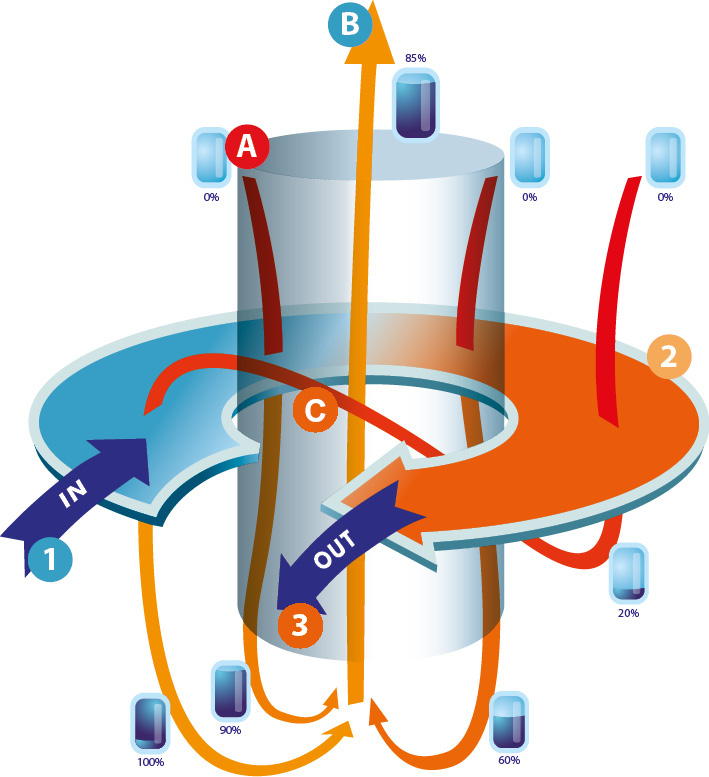
The material to be dried is fed onto the lower rotating disc.
The material to be dried completes a 360° rotation on the rotating disc.
The dried material is discharged to the packaging or storage area.
The hot air is drawn downward through the rotating disc.
The moisture-saturated air is blown upward for discharge. Any dust present can be filtered.

The excess energy available at the end of the drying cycle can be recovered using a recirculation fan and then reused at the beginning of the cycle, where the product has the highest moisture content.